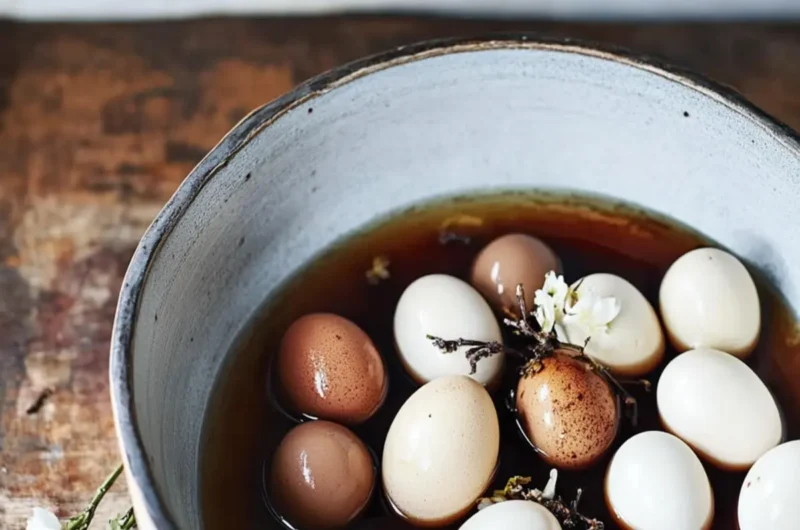
There’s something wonderfully enchanting about the aroma that fills the kitchen when you slow-simmer Persian tea eggs. As the fragrant notes of black tea and spices waft through the air, your senses transport you to a warm gathering, perhaps set against a backdrop of family traditions and stories shared over hearty meals. This delightful dish, deeply rooted in Sephardic Jewish culture, might surprise you with its rich flavor and stunning presentation—perfect for cozy brunches or festive occasions. What’s more, these easy-to-peel eggs carry with them a tapestry of heritage, making them not just food, but a beautiful celebration of connection and family. Let’s dive into the comforting world of slow-simmered tea-stained eggs and create a dish that’s as fascinating to make as it is to savor.

Why You’ll Love These Slow Simmered Tea Stained Eggs
Irresistible Aroma: The moment you start slow-simmering these eggs, your kitchen will fill with the warm, inviting scent of black tea and spices, setting the perfect mood for any gathering.
Flavor Explosion: With each bite, you’ll discover the unique infusion of flavors that only hours of simmering can achieve—creamy interiors bursting with the richness of tea and subtle spices.
Cultural Connection: These eggs aren’t just food; they’re a piece of heritage. Celebrating Sephardic Jewish traditions, you’ll feel a sense of connection with family while enjoying this comforting dish.
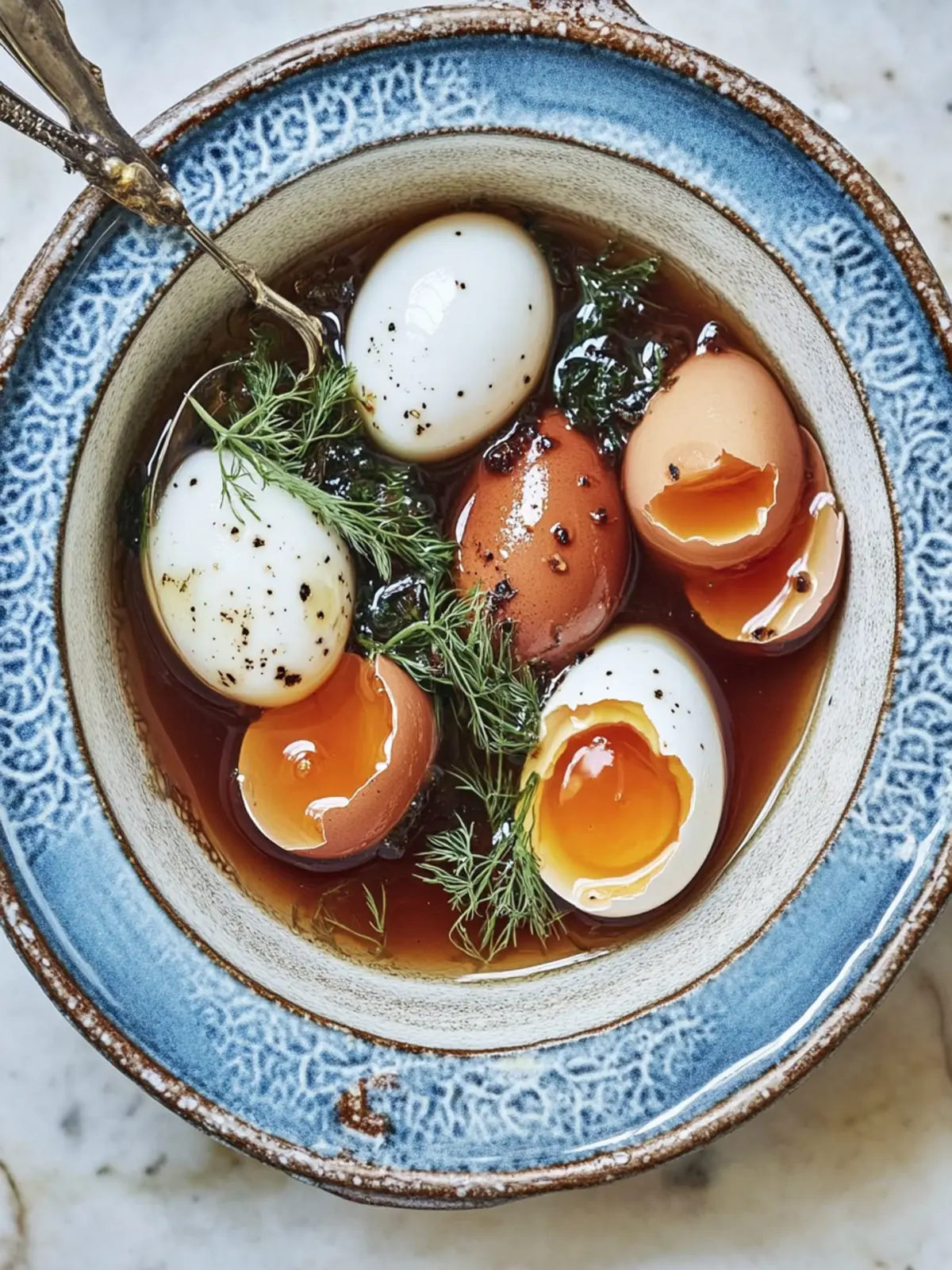
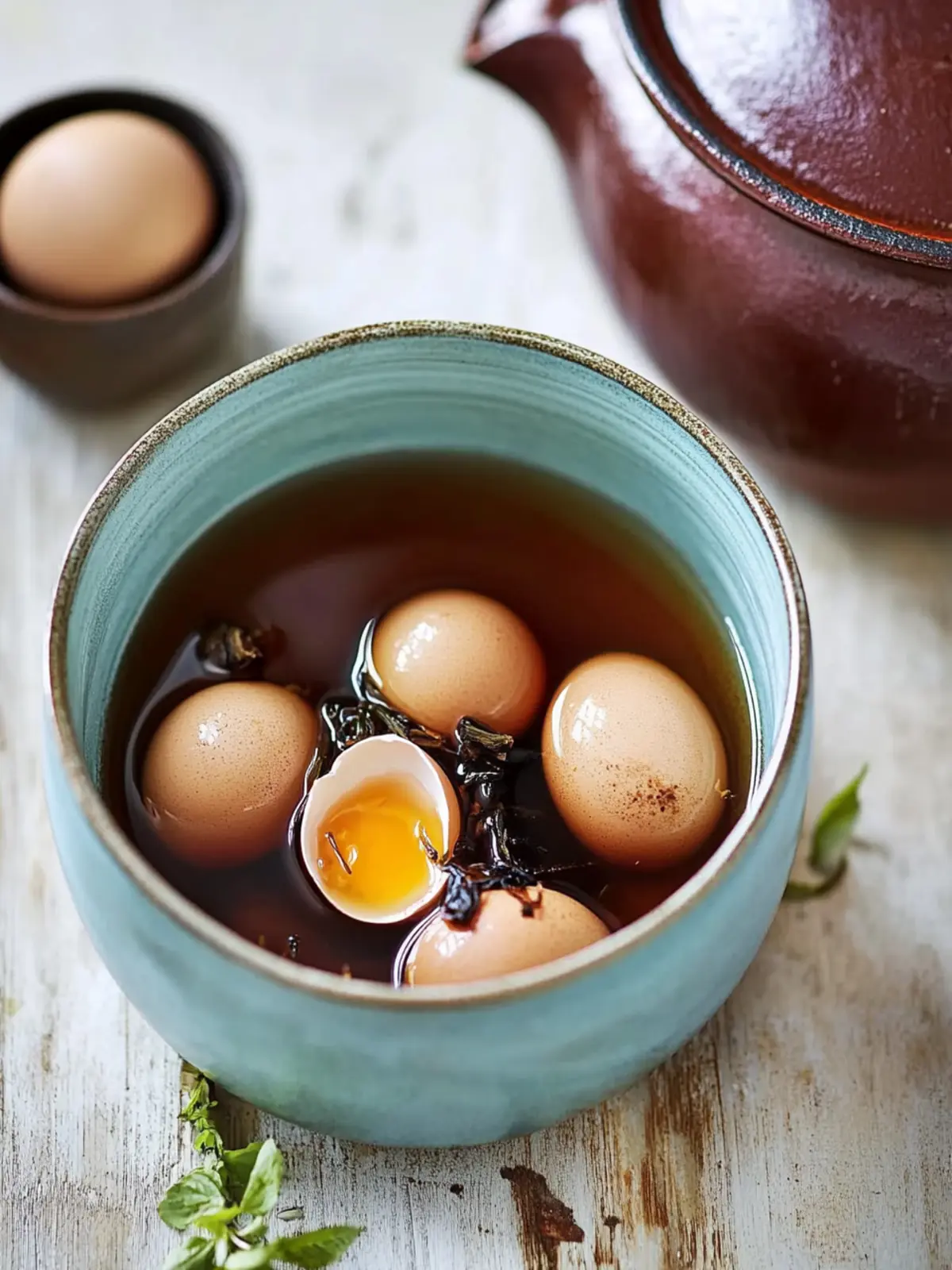
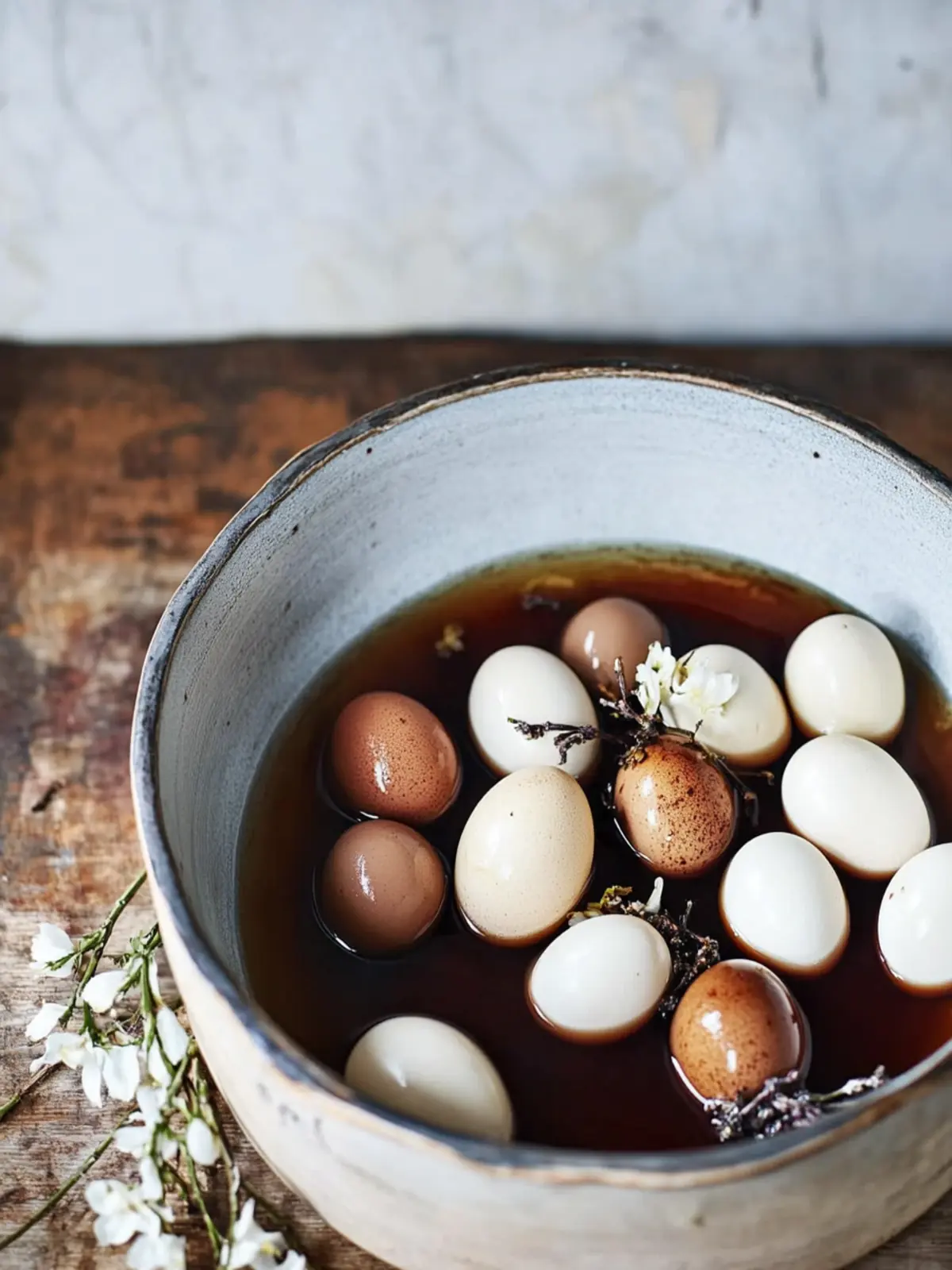
Visual Appeal: The beautiful, tea-stained shell designs will impress your guests, making these eggs a stunning addition to any table spread.
Easy to Prepare: With minimal hands-on time, this dish allows you to set it and forget it, ensuring a delightful meal with less hassle.
Versatile Serving Options: Perfect for breakfast, snacks, or as an elegant brunch dish, these eggs can be enjoyed hot, warm, or cold alongside a fresh salad or Persian bread, adding a unique twist to your meals.
Slow Simmered Tea Stained Eggs Ingredients
For the Eggs
• Eggs – The star of the dish, providing protein and a creamy texture. Free-range or cage-free are best for flavor.
For the Infusion
• Onion Peels – They not only impart a depth of flavor but also naturally dye the eggs. If you lack peels, use 2 yellow onions as a substitute.
• Darjeeling Tea – This offers essential flavor and color; loose leaf or even leftover brewed tea can be used without compromising quality.
• Cardamom Pods (optional) – Adds lovely warmth and aroma, but feel free to omit if you prefer a more straightforward tea flavor.
• Water – Essential for simmering and infusing the flavors during the cooking process. Aim to cover the ingredients by at least 2 inches.
Embrace the rich tapestry of flavors with these slow simmered tea stained eggs, perfect for any occasion!
How to Make Slow Simmered Tea Stained Eggs
-
Combine ingredients: Start by placing eggs, onion peels (or chopped onions), Darjeeling tea, and water into a large pot. Stir gently to mix everything well.
-
Check water level: Ensure that the water covers the ingredients by at least 2 inches. This helps to achieve an even infusion of flavors while cooking.
-
Boil then simmer: Bring the mixture to a rolling boil over medium heat. Once boiling, reduce the heat to very low and allow it to simmer for 8 hours, or overnight, for the best flavor.
-
Crack for darker patterns: About two hours before the cooking time is done, carefully crack the eggshells on a hard surface. Return the eggs to the simmering pot to achieve beautiful, dark stains.
-
Serve as desired: Once cooked, you can serve the eggs hot, warm, or chilled according to your preference. Enjoy them solo or alongside your favorite dishes!
Optional: Garnish with fresh herbs or serve with a sprinkle of sea salt for an extra touch.
Exact quantities are listed in the recipe card below.
Make Ahead Options
Preparing slow simmered tea stained eggs in advance is a fantastic way to save time during busy weeks or for special gatherings! You can boil and simmer the eggs up to 24 hours ahead of time, allowing the flavors to meld beautifully. Simply follow the cooking instructions, and when they’re done simmering, let them cool before refrigerating. To maintain their quality, store the eggs in their peels in an airtight container to ensure they stay fresh and flavorful. When you’re ready to enjoy, you can serve them cold, or warm them gently. These make-ahead eggs offer effortless elegance to any meal with just a bit of advance planning!
How to Store and Freeze Slow Simmered Tea Stained Eggs
Fridge: Store leftover slow simmered tea stained eggs in an airtight container for up to 1 week, letting the flavors deepen with each passing day.
Freezer: If you wish to freeze these eggs, do so before simmering. Hard-boiled eggs can be frozen for up to 6 months, but they may change texture upon thawing.
Reheating: To reheat the eggs, gently place them in warm water or steam them for about 5-10 minutes until heated through. This keeps their creamy interior intact!
Note: When storing, avoid direct contact of eggs with moisture to maintain their quality.
Expert Tips for Slow Simmered Tea Stained Eggs
-
Perfect Peeling: Crack the eggs gently before simmering to create small fractures, helping them peel easily after cooking.
-
Use Fresh Ingredients: Opt for fresh onion peels and free-range eggs for richer flavor and better dye results.
-
Monitor Cooking Time: Keep an eye on the simmering process; if you’re cooking overnight, set a timer to avoid overcooking.
-
Amp Up Flavors: Feel free to experiment with spices like cinnamon or additional cardamom for enhanced flavor in your tea stained eggs.
-
Storage Matters: Store any leftovers in the refrigerator in an airtight container for up to a week to let the flavors deepen.
Slow Simmered Tea Stained Eggs Variations & Substitutions
Feel free to get creative with these ideas while preparing your slow-simmered tea-stained eggs, allowing your taste buds to explore!
-
Herbal Infusion: Substitute black tea with herbal tea for a caffeine-free version that offers unique flavors, like chamomile or rooibos.
-
Spice Twist: Add more cardamom or a pinch of cinnamon for a warm kick, enhancing the overall flavor profile while delighting spice lovers.
-
Onion Variation: If you lack onion peels, using fresh red or yellow onions in their place can still provide great flavor and color.
-
Add Heat: Spice enthusiasts can toss in a few crushed red pepper flakes for a gentle heat that contrasts beautifully with the tea.
-
Vegetarian Delight: Swap out eggs for firm tofu cubes for a plant-based twist; the flavors will still imbue the tofu, creating a creative dish.
-
Flavorful Broth: Instead of water, use vegetable or chicken broth for an added depth of flavor, making the dish even more savory.
-
Tea Type: Experiment with other tea varieties like lapsang souchong for a smoky infusion, or jasmine tea for a floral aroma that captivates the senses.
-
Doughy Partner: Serve your tea-stained eggs with homemade naan or pita, allowing you to scoop up the flavorful egg—perfect for brunch or snacks!
What to Serve with Slow Simmered Tea Stained Eggs?
There’s something special about creating a memorable meal that brings warmth and connection to your table.
-
Fresh Persian Bread: This soft, fluffy bread is perfect for dipping into the creamy yolks and enhances the dish’s cultural roots.
-
Herb Salad: A refreshing mix of parsley, mint, and arugula adds brightness and balances the rich flavors of the eggs, creating a delightful contrast.
-
Roasted Vegetables: Seasonal vegetables like carrots and bell peppers, roasted to perfection, provide a hearty side that complements the dish’s delicate flavors.
-
Spiced Yogurt Dip: Creamy yogurt seasoned with garlic and fresh herbs offers a cooling contrast that elevates the taste experience with every bite.
-
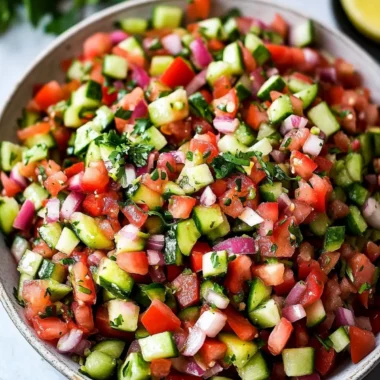
Cucumber Tomato Salad: Crisp, refreshing, and slightly tangy, this salad serves as a lovely palate cleanser, perfect alongside the warm eggs.
-
Sweet Dates or Figs: The natural sweetness from these dried fruits makes for an exquisite dessert that balances the savory elements of the meal beautifully.
-
Mint Tea: A traditional pairing, this fragrant tea brings a soothing finish and enhances the overall dining experience, grounding the meal in Persian heritage.
Slow Simmered Tea Stained Eggs Recipe FAQs
How can I select the best eggs for this recipe?
Absolutely! For the richest flavor and better dye results, I recommend using free-range or cage-free eggs. These not only taste better but also create a lovely, vibrant color on the egg shells.
What is the best way to store leftover slow simmered tea stained eggs?
You can store any leftover eggs in an airtight container in the refrigerator for up to 1 week. As they sit, the flavors will develop even further, enriching your next enjoyment of this dish.
Advertisement
Can I freeze hard-boiled eggs? How should I do it?
Yes, you can freeze hard-boiled eggs, but it’s best to do it before the simmering process. Simply peel them, place them in a freezer-safe container or bag, and store for up to 6 months. To thaw, let them sit in the fridge overnight or place them in warm water for a quicker thaw.
Why are my eggs hard to peel after cooking?
If you’re having trouble peeling the eggs, it may be because they were too fresh. Older eggs tend to peel easier due to the natural aging process, which allows the shell to separate more easily from the white. Additionally, cracking the shells gently before simmering helps create tiny fractures which make peeling a breeze afterward!
Are there any dietary considerations with these tea stained eggs?
These eggs are naturally gluten-free and can be enjoyed by most! However, if you have allergies, check the ingredients in tea blends or opt for simple black tea to avoid any mix-ins that could affect your dietary restrictions.
What’s the best way to reheat leftover tea stained eggs?
To reheat, gently place the eggs in warm water or steam them for about 5-10 minutes until heated through. This method helps retain their creamy texture and ensures they don’t get tough or rubbery.
Slow Simmered Tea Stained Eggs for a Flavorful Delight
Ingredients
Equipment
Method
- Start by placing eggs, onion peels, Darjeeling tea, and water into a large pot. Stir gently to mix everything well.
- Ensure that the water covers the ingredients by at least 2 inches to achieve an even infusion of flavors.
- Bring the mixture to a rolling boil over medium heat. Once boiling, reduce the heat to very low and allow it to simmer for 8 hours, or overnight, for the best flavor.
- About two hours before the cooking time is done, carefully crack the eggshells on a hard surface and return them to the pot.
- Once cooked, serve the eggs hot, warm, or chilled according to your preference.