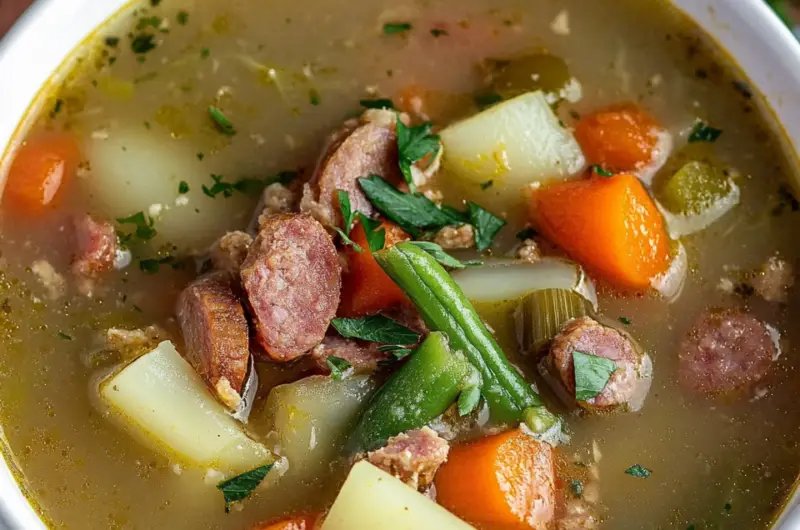
The German Bean Soup, or Bohnensuppe, is a soul-warming dish that brings together the bold flavors of smoked meats with the gentle comfort of seasonal vegetables. A beloved classic in many German households, this soup is more than just a meal it’s a memory of hearty countryside cooking and cozy kitchen tables. What sets this recipe apart is its rustic simplicity and ability to be adapted. Whether you’re using a smoked pork chop, a ham hock, or just a good-quality sausage, the flavor permeates the broth beautifully. Combined with fresh green beans, potatoes, and aromatic leeks, it results in a deeply satisfying soup that nourishes both body and soul. Ideal for winter nights or lazy weekend lunches, this dish is an essential in any comfort food repertoire.
Full Recipe:
Ingredients:
-
2 tablespoons olive oil
-
1 onion, chopped
-
2 cloves garlic, minced
-
2 medium carrots, sliced
-
2 celery stalks, sliced
-
1 medium leek, sliced (white and light green parts only)
-
1 large potato, cubed
-
2 cups green beans, trimmed and chopped
-
6 cups beef or vegetable broth
-
1 smoked sausage (kielbasa or similar), sliced
-
1 smoked pork chop or ham hock (optional), diced
-
Salt and pepper, to taste
-
1 tablespoon chopped fresh parsley (for garnish)
Directions:
-
Heat olive oil in a large pot over medium heat.
-
Add onion and garlic, sauté until fragrant and translucent (about 3 minutes).
-
Stir in carrots, celery, and leek. Cook for another 5 minutes until slightly softened.
-
Add potatoes and green beans. Stir to combine.
-
Pour in the broth and bring everything to a boil.
-
Reduce heat to a simmer, cover, and cook for 20–25 minutes until vegetables are tender.
-
Add sliced sausage and smoked pork (if using). Simmer for an additional 10 minutes.
-
Season with salt and pepper to taste.
-
Garnish with chopped parsley before serving.
Prep Time: 10 minutes | Cooking Time: 35 minutes | Total Time: 45 minutes
Kcal: 280 kcal | Servings: 6 servings
A Hearty Tradition: Exploring the Rich Flavors of German Bean Soup
German Bean Soup known in its homeland as Bohnensuppe is a timeless and hearty dish that exemplifies the essence of traditional German cooking. It’s a recipe rooted in frugality, seasonality, and the robust use of ingredients like smoked meats, fresh garden vegetables, and humble legumes. Served warm and often with a crusty piece of rye bread, this comforting soup offers a well-rounded, deeply savory profile that makes it a beloved staple in German kitchens.
Whether prepared during the cold winters of Bavaria or as a summer garden harvest in Saxony, German Bean Soup is versatile and incredibly satisfying. This article will dive into its history, regional variations, health benefits, and cultural significance, giving readers a deeper appreciation for this delicious and rustic dish.
The Cultural Roots of Bohnensuppe
German cuisine is built on time-honored recipes passed down through generations, and Bohnensuppe is no exception. It embodies the traditional German value of Essen mit Herz (eating with heart). Historically, this soup was a go-to meal for rural families, made with whatever beans and vegetables were in season, often enhanced with bits of smoked pork or sausage from the family smokehouse.
In the early days, especially in farming communities, this soup served as a complete meal. Beans were an important protein source, especially when meat was scarce or expensive. Smoking meat not only preserved it but also intensified its flavor making just a small amount go a long way in flavoring large pots of soup.
Different regions in Germany add their own spin to the dish. In Bavaria, for example, it might include a mix of white and green beans with potatoes and leek. In the Rhineland, it’s common to find lentils or split peas blended in. Some variations even use vinegar or mustard to add a tangy contrast to the smoky broth.
Why This Soup Stands the Test of Time
One of the most appealing aspects of German Bean Soup is its simplicity and adaptability. It doesn’t rely on exotic ingredients or overly complicated steps, yet the result is rich, flavorful, and deeply satisfying. This makes it ideal for both novice cooks and experienced home chefs looking to recreate a rustic European dish.
The use of smoked meats such as kielbasa, smoked pork chops, or ham hocks adds a depth of flavor that defines the soup. Unlike soups that use only bouillon cubes or standard broth, Bohnensuppe develops its taste over time as the ingredients simmer and the smokiness infuses every spoonful.
Moreover, this soup is incredibly flexible. You can make it vegetarian by omitting the meat and using vegetable broth while keeping the robust flavor profile through spices and herbs. Add more root vegetables in winter for a heartier version or lighten it up in summer with tender green beans and fresh parsley.
Seasonal and Nutritional Benefits
Another highlight of German Bean Soup is its strong connection to seasonal eating. In spring and summer, fresh beans from the garden are ideal, while in colder months, preserved or dried beans can be used to create a deeper, earthier taste.
Beans are a nutritional powerhouse rich in fiber, protein, iron, and antioxidants. When combined with vegetables like carrots, leeks, and potatoes, the soup provides a well-balanced meal that satisfies hunger and delivers sustained energy. Smoked sausage or pork adds protein and depth, although the dish remains fulfilling even in its meatless version.
Additionally, this soup is naturally gluten-free and can be easily adapted to fit low-sodium or low-fat dietary needs by selecting lean meats and adjusting seasoning accordingly.
Serving Suggestions and Pairings
Traditionally, German Bean Soup is served as a main dish, often accompanied by a thick slice of dark rye bread or Bauernbrot (farmer’s bread). The crusty bread is perfect for soaking up the flavorful broth and makes the meal even more substantial.
For a more festive presentation, consider garnishing the soup with a dollop of sour cream or a sprinkle of freshly chopped parsley. A side of German mustard and pickled vegetables like sauerkraut or gherkins can also complement the smoky, earthy tones of the soup.
To turn it into a full German dining experience, pair the dish with a light Riesling or a malty Dunkel beer, which complements the smokiness and balances the richness of the soup.
Perfect for Batch Cooking and Meal Prep
Bohnensuppe is not just delicious; it’s also incredibly practical. It stores well in the refrigerator and actually tastes better the next day, as the flavors have more time to meld. It can be frozen in individual portions for quick and easy lunches or dinners during busy weeks.
When reheating, simply add a splash of broth or water to bring it back to its original consistency, as it may thicken slightly when chilled.
Its ability to scale makes it perfect for feeding a large family, meal prepping for the week, or preparing ahead for guests. It’s a one-pot wonder that doesn’t demand much attention while cooking, freeing you up to focus on other tasks or simply relax.
Regional Variations Worth Trying
While the classic version of German Bean Soup already shines, there are numerous regional twists worth exploring:
-
Swabian Style: Includes spätzle or egg noodles for extra heartiness.
-
Rhenish Style: Adds apple cider vinegar or a splash of mustard for a tangy note.
-
Saxon Style: Features white beans and pearl barley with ham hocks.
-
Berlin Style: Often includes root vegetables like rutabaga and turnips, reflecting the capital’s agricultural surroundings.
These variations can inspire home cooks to experiment and adjust the soup according to personal preferences, seasonal produce, or pantry availability.
Advertisement
Why It Belongs on Your Table
German Bean Soup is much more than a bowl of beans and broth it’s a culinary heritage that connects generations through food. Its rustic charm, nutritional balance, and deep, smoky flavors make it a welcome dish on any table. Whether you’re craving something warm and cozy or looking to try an authentic German recipe, this soup delivers.
It’s also a fantastic way to introduce children and picky eaters to new vegetables and flavors, as the comforting broth and familiar textures make it approachable and enjoyable.
Conclusion:
In a world where fast food and fleeting trends dominate, German Bean Soup is a reminder of the beauty in slow cooking, seasonal ingredients, and comfort food that feeds both body and soul. It’s versatile, deeply flavorful, and anchored in tradition a true expression of German home cooking at its best.
Whether you make it once or add it to your regular meal rotation, you’ll find that this dish resonates with simplicity, heartiness, and a sense of place. So the next time you crave something satisfying and soulful, turn to a pot of Bohnensuppe and taste the timeless comfort of Germany in every spoonful.